

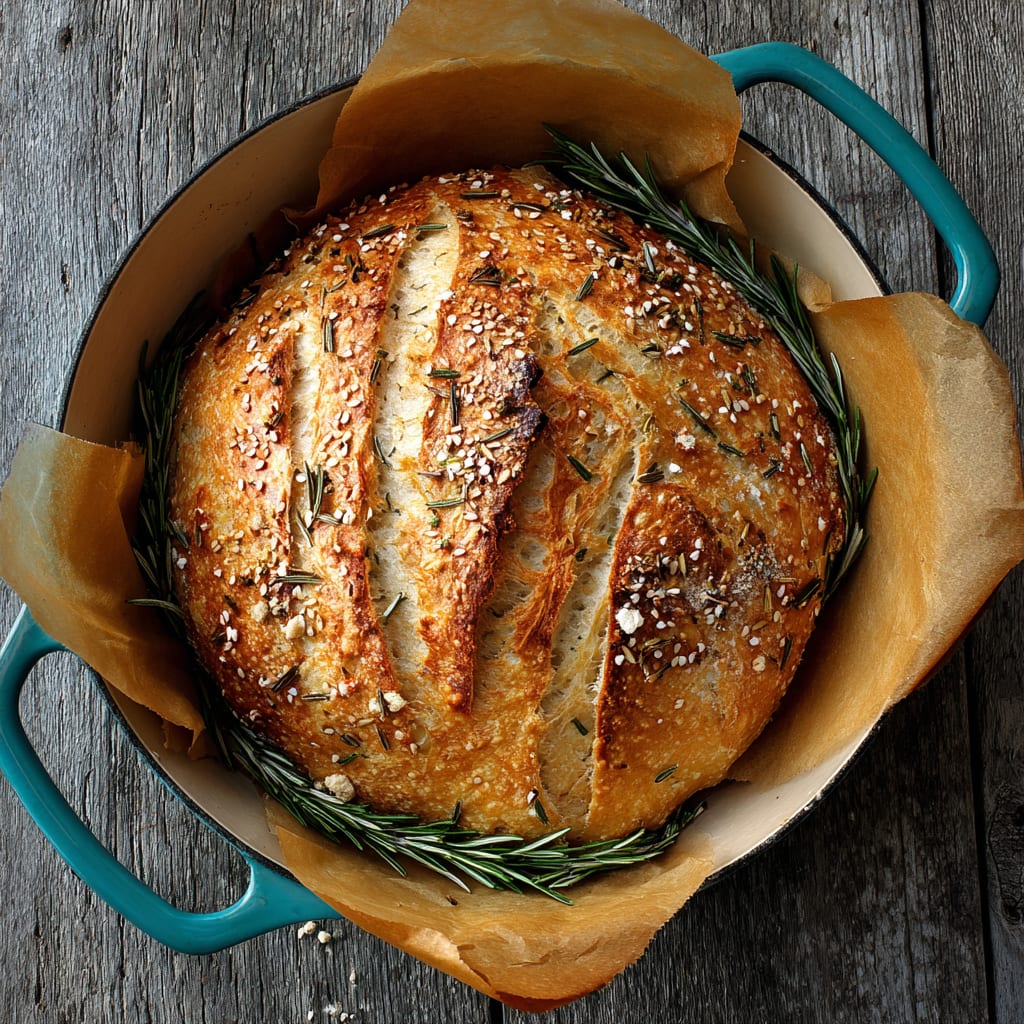
Imagine the intoxicating aroma of fresh Rosemary and Sea Salt Rustic Bread Loaf filling your kitchen as it bakes to golden perfection. This artisanal bread features a crackling crust that gives way to a tender, airy interior studded with fragrant rosemary and flecks of sea salt. The slow fermentation process creates complex flavors that simply can’t be matched by store-bought alternatives. You’ll learn how to create bakery-quality Rosemary and Sea Salt Rustic Bread Loaf with minimal hands-on time using a simple folding technique that develops gluten without kneading.
Why You’ll Love This Recipe
This Rosemary and Sea Salt Rustic Bread Loaf will quickly become your go-to bread recipe for several compelling reasons. First, despite its professional appearance, it requires no special equipment or bread-making experience—just a dutch oven and some patience. The contrast between the crackly, sea salt-studded crust and the soft, aromatic interior creates a sensory experience that elevates any meal.
The long fermentation happens mostly in your refrigerator, developing deep flavor while you’re free to do other things. With only 20-30 minutes of actual hands-on time spread over two days, you’ll achieve bread that rivals expensive artisanal bakeries at a fraction of the cost.
The versatility of this loaf is another winning feature—it pairs beautifully with everything from olive oil and balsamic for dipping to hearty winter soups or summer tomato salads. The herbal notes from fresh rosemary and the subtle crunch of sea salt create a rustic bread that’s both sophisticated and comforting.
Ingredients List for the Rosemary and Sea Salt Rustic Bread Loaf:
The magic of this bread comes from quality ingredients and time. The high-protein bread flour creates structure, while fresh rosemary and sea salt provide aromatic depth and textural contrast that make this loaf truly special.
- 3 cups (14 2/3 ounces) bread flour
- 1 teaspoon instant, rapid-rise or active-dry yeast
- 1 1/2 cups (12 ounces) water, room temperature
- 4 tablespoons extra-virgin olive oil, divided
- 1 1/4 teaspoons table salt
- 4 tablespoons fresh rosemary, chopped
- 1 tablespoon coarse sea salt
- Vegetable oil spray
Pro Tips
For the perfect Rosemary and Sea Salt Rustic Bread Loaf, remember these crucial techniques:
First, don’t rush the cold fermentation stage. The overnight refrigeration is where much of the flavor development happens, with the yeast slowly working to create complex tastes and improved texture. A minimum of 12 hours is essential, but 18-24 hours yields even better results.
Second, properly preheat your dutch oven or cast iron pot. Starting with a blazing hot container creates the initial steam and heat needed to develop that coveted artisanal crust. Allow at least 30 minutes for the pot to reach temperature before adding your dough.
Lastly, the folding technique replaces traditional kneading but serves the same purpose—developing gluten structure. Use wet hands when folding to prevent sticking, and be gentle but deliberate with each fold to avoid deflating the developing air pockets that will give your bread its perfect interior texture.
Instructions
Step 1: For the dough: Whisk flour and yeast together in medium bowl. Add room-temperature water and one tablespoon olive oil and stir with wooden spoon until shaggy mass forms and no dry flour remains. Cover bowl with plastic wrap and let sit for 10 minutes.
Step 2: Sprinkle table salt and 3 tablespoons chopped rosemary over dough, drizzle on the remaining 3 tablespoons olive oil, and mix until fully incorporated. Cover bowl with plastic and let dough rest for 20 minutes. Using your wet hands, fold dough over itself by gently lifting and folding edge of dough toward middle. Turn bowl 90 degrees; fold again. Turn bowl and fold dough 4 more times (total of 6 turns). Cover bowl with plastic and let dough rest for 20 minutes. Repeat folding technique, turning bowl each time, until dough tightens slightly, 3 to 6 turns total 3 more times over the next 2 hours. Then cover bowl with plastic and refrigerate for at least 12 hours or up to 24 hours.
Step 3: Heat oven and a large of a cast iron pot (lid on) to 450F.
Step 4: In the meantime, take dough from the refrigerator and shape to a boule, with the seam facing bottom. Let rise on piece of floured parchment paper, covered with a piece of plastic wrapped sprayed with vegetable oil spray.
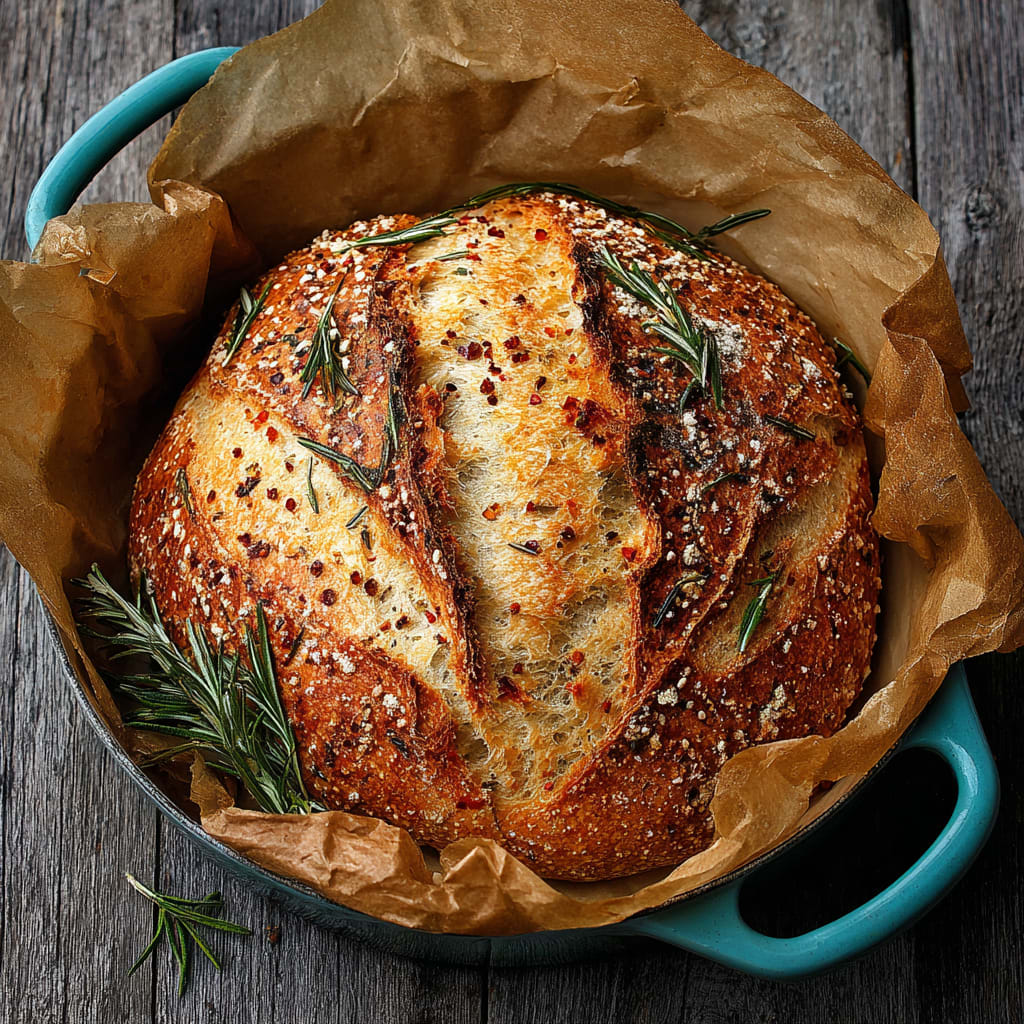
Step 5: Once oven and pot have come up to temperature, carefully transfer the loaf to the dutch oven on the piece of parchment. Slash the loaf across the top with a sharp knife or lame. Brush with olive oil and sprinkle with remaining rosemary and the sea salt.
Step 6: Bake with the cover on for 40 minutes. Remove lid and bake for 15-20 minutes more, until the loaf is golden brown and crusty. Let cool to room temperature. Best if served the same day.
Variations
The basic Rosemary and Sea Salt Rustic Bread Loaf recipe provides an excellent canvas for customization. For a Mediterranean twist, add 1/2 cup of pitted and chopped Kalamata olives and 1/4 cup of crumbled feta cheese to the dough when incorporating the salt and rosemary. The olives add brininess while the feta creates pockets of creamy saltiness.
For those who enjoy some heat, a Spicy Garlic variation works beautifully by replacing half the rosemary with 3-4 cloves of minced garlic and adding 1/2 teaspoon of red pepper flakes. The garlic infuses the bread with aromatic depth while the pepper flakes provide a gentle warming kick.
For a heartier option, try a Whole Wheat Rustic Loaf by replacing 1 cup of the bread flour with whole wheat flour. This creates a nuttier flavor profile and adds nutritional benefits, though you may need to add an extra tablespoon of water to account for the whole wheat flour’s higher absorption.
Storage and Serving
Your freshly baked Rosemary and Sea Salt Rustic Bread Loaf will maintain its best texture and flavor on the day it’s baked. Store any leftover bread at room temperature in a paper bag or wrapped loosely in a clean kitchen towel for up to two days. For longer storage, slice the bread completely once cooled and freeze in a zip-top bag for up to one month, removing slices as needed and toasting directly from frozen.
This rustic bread makes an outstanding accompaniment to hearty soups and stews, where it can be used to sop up flavorful broths. It’s also perfect for creating elevated sandwiches—try it with prosciutto, arugula, and a drizzle of balsamic glaze for a simple yet impressive lunch.
Perhaps the most elegant way to serve this bread is as part of a Mediterranean-inspired antipasto platter: slice it thickly and serve alongside good olive oil for dipping, a selection of aged cheeses, olives, and sun-dried tomatoes for a casual yet sophisticated appetizer spread.
FAQs
Can I use active dry yeast instead of instant yeast?
Yes, you can substitute active dry yeast for instant yeast in this Rosemary and Sea Salt Rustic Bread Loaf. The amounts remain the same (1 teaspoon), but you may notice a slightly longer rise time during the initial fermentation stages.
Why is my bread dense instead of airy?
Dense bread usually results from either insufficient fermentation time or overly aggressive handling during shaping. Ensure you’re giving the dough its full cold fermentation period and handle gently when shaping to preserve air bubbles.
Can I make this bread without a Dutch oven?
While a Dutch oven creates the ideal environment for crusty artisanal bread, you can use any oven-safe pot with a tight-fitting lid. Alternatively, place the dough on a preheated baking stone and create steam by placing a pan of hot water on the lower rack during baking.
Is it necessary to refrigerate the dough overnight?
Yes, the cold fermentation is essential for developing flavor and texture in this rustic bread. Skipping this step will result in a less flavorful loaf with poorer texture.
Can I use dried rosemary instead of fresh?
Fresh rosemary provides the best flavor, but if necessary, substitute with 1 tablespoon dried rosemary instead of the 4 tablespoons fresh. Rehydrate the dried rosemary by soaking in 1 tablespoon of warm water for 5 minutes before adding to the dough.
Rosemary and Sea Salt Rustic Bread Loaf
- Prep Time: 15 mins
- Cook Time: 30 mins
- Total Time: 45 mins
- Yield: 4 people 1x
- Category: Appetizer
- Method: Cooking
- Cuisine: American
Description
Indulge in the aroma of freshly baked Rosemary and Sea Salt Rustic Bread Loaf. Discover the perfect recipe for a delightful homemade treat.
Ingredients
- 3 cups (14 2/3 ounces) bread flour
- 1 teaspoon instant, rapid-rise or active-dry yeast
- 1 1/2 cups (12 ounces) water, room temperature
- 4 tablespoons extra-virgin olive oil, divided
- 1 1/4 teaspoons table salt
- 4 tablespoons fresh rosemary, chopped
- 1 tablespoon coarse sea salt
- Vegetable oil spray
Instructions
- Step 1– For the dough: Whisk flour and yeast together in medium bowl. Add room-temperature water and one tablespoon olive oil and stir with wooden spoon until shaggy mass forms and no dry flour remains. Cover bowl with plastic wrap and let sit for 10 minutes.
- Step 2– Sprinkle table salt and 3 tablespoons chopped rosemary over dough, drizzle on the remaining 3 tablespoons olive oil, and mix until fully incorporated. Cover bowl with plastic and let dough rest for 20 minutes. Using your wet hands, fold dough over itself by gently lifting and folding edge of dough toward middle. Turn bowl 90 degrees; fold again. Turn bowl and fold dough 4 more times (total of 6 turns). Cover bowl with plastic and let dough rest for 20 minutes. Repeat folding technique, turning bowl each time, until dough tightens slightly, 3 to 6 turns total 3 more times over the next 2 hours. Then cover bowl with plastic and refrigerate for at least 12 hours or up to 24 hours.
- Step 3- Heat oven and a large of a cast iron pot (lid on) to 450F.
- Step 4– In the meantime, take dough from the refrigerator and shape to a boule, with the seam facing bottom. Let rise on piece of floured parchment paper, covered with a piece of plastic wrapped sprayed with vegetable oil spray.
- Step 5- Once oven and pot have come up to temperature, carefully transfer the loaf to the dutch oven on the piece of parchment. Slash the loaf across the top with a sharp knife or lame. Brush with olive oil and sprinkle with remaining rosemary and the sea salt.
- Step 6- Bake with the cover on for 40 minutes. Remove lid and bake for 15-20 minutes more, until the loaf is golden brown and crusty. Let cool to room temperature. Best if served the same day.
Notes
Try This Recipe and Leave a comment Below, your opinion matters to me!
Nutrition
- Serving Size: 4 serving
- Calories: 400
- Sugar: 5g
- Sodium: 400mg
- Fat: 10g
- Saturated Fat: 3g
- Unsaturated Fat: 7g
- Trans Fat: 0g
- Carbohydrates: 40g
- Fiber: 5g
- Protein: 15g
- Cholesterol: 50mg